

Blog
Walnut or Oak? Choosing the Right Wood Pattern for Doors and Furniture

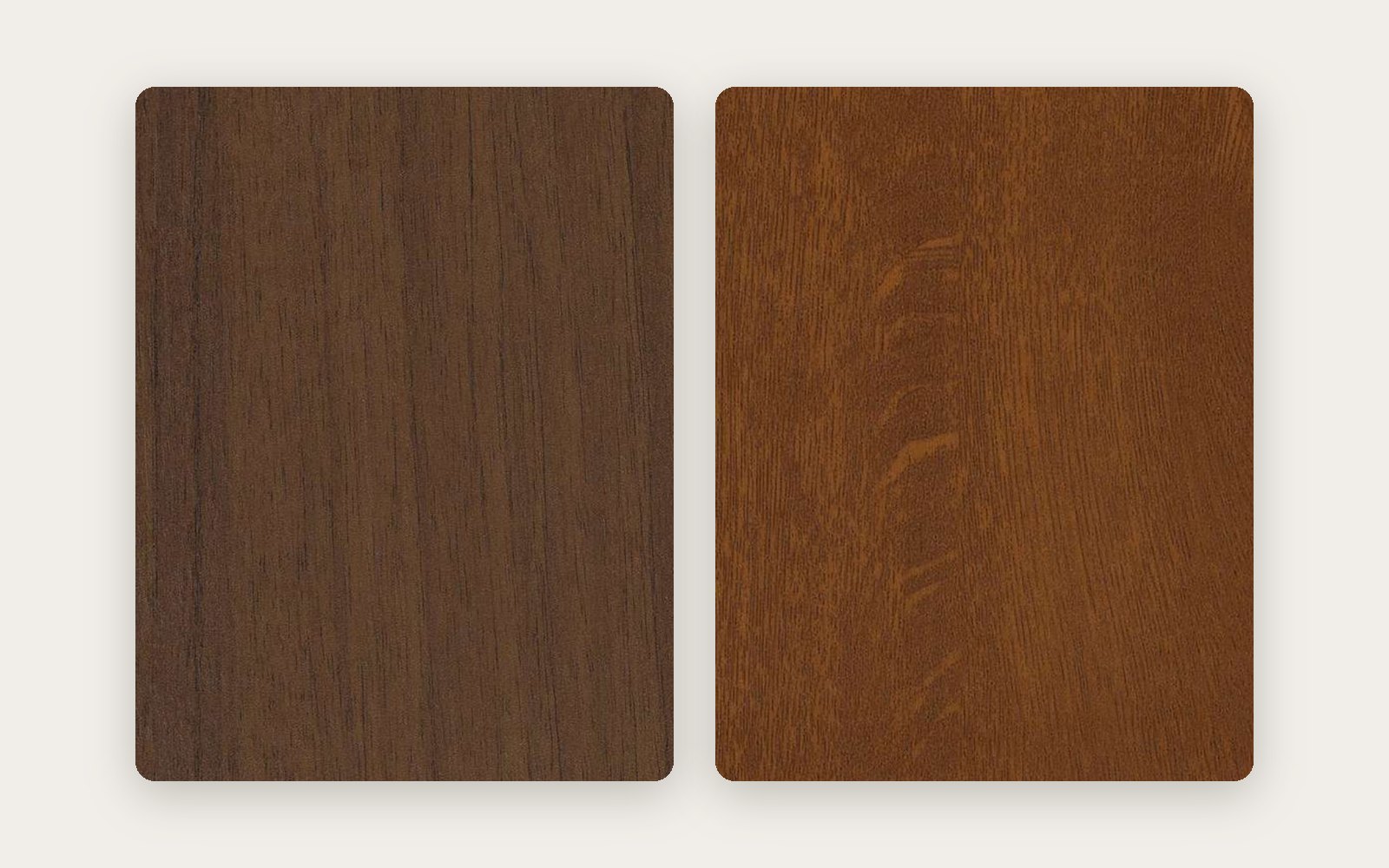
The most common question when choosing a wood pattern is whether to go for walnut or oak. Both are timeless and both add warmth, but the feeling they give a space is quite different. The right choice depends on the light, the floor and the atmosphere you want.
Walnut: deep, warm and bold
Walnut is known for its chocolate and coffee tones and its wavy, pronounced grain. It brings a luxurious, dignified air to a space, and creates a strong focal point when used with light-coloured walls.
- Where it works best: Large, well-lit living rooms, studies, bedrooms and classic or transitional kitchens.
- What to watch: In small rooms with little light, dark walnut can make the space feel smaller; lighter walnut tones are a good alternative there.
Suggestions: Italian Walnut, Anatolian Walnut, Dark Walnut and Light Natural Walnut patterns.
Oak: light, natural and calm
Oak stands out with its honey, beige and grey tones and its straighter, more regular grain. It makes a space feel more open than it is, and is essential to Scandinavian, minimal and natural styles.
- Where it works best: Small and medium-sized rooms, children’s rooms, corridors and bright, modern kitchens.
- What to watch: Light oak used with a very light floor can look flat; dark handles or black details add contrast.
Suggestions: Golden Oak, Grey Oak and Natural Touch Oak patterns.
Four questions to help you decide
- How much light does the space get? In low light oak works better; with plenty of light walnut comes into its own.
- What tone is the floor? Instead of matching the floor exactly, leave a clear difference: walnut on a light floor and oak on a dark floor look balanced.
- Which style do you love? Walnut for a classic, warm feel; oak for a simple, airy one.
- What colours will it sit with? Walnut pairs beautifully with white, cream and anthracite; oak with white, green and grey tones.
Can you use both together?
Yes, but one of them should take the lead. For example, the doors and built-in wardrobes can be oak while the TV unit in the living room or the kitchen island is walnut. When using the two woods side by side, a solid colour such as white, anthracite or a stone look in between softens the transition. To think about patterns together, read: Choosing patterns for kitchens and furniture
Frequently asked questions
Which shows marks and smudges less?
Mid-tone patterns with a visible grain hide small marks best. Very dark walnut can show dust and fingerprints a little more, while very light oak can show stains more.
Can I get pattern samples?
Yes. To see walnut and oak patterns in the light of your own space, request samples.
