

Blog
PVC Foil Lifting: Causes and Solutions

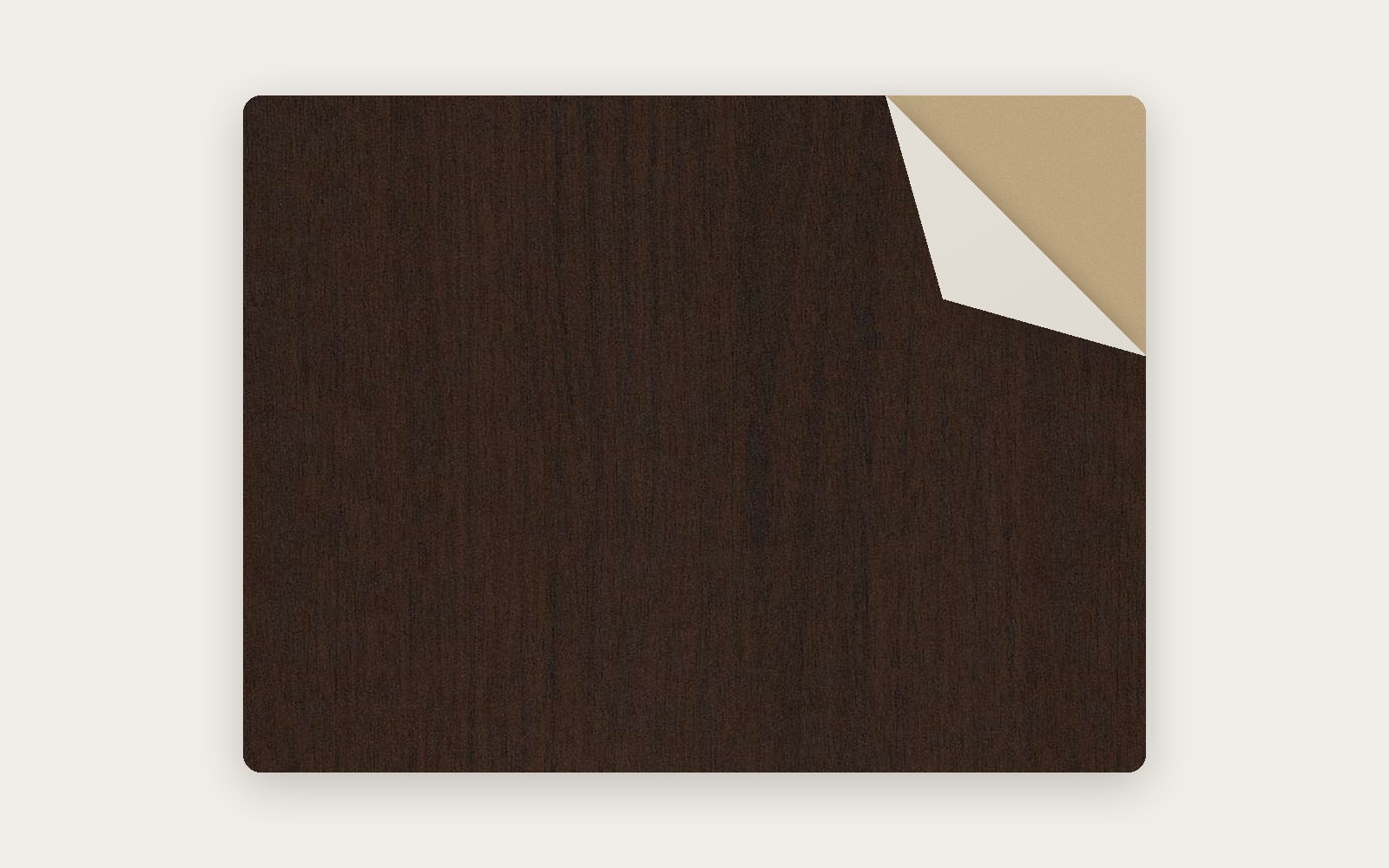
The most common problem with PVC foil doors and fronts is the foil lifting at the edges or in profile recesses. Lifting is rarely caused by the foil itself; it usually comes from the adhesive, the pressing conditions or the environment the piece is used in. Identifying the cause correctly helps both makers and users avoid the problem happening again.
Causes in production
- Too little or uneven adhesive: Spraying too little adhesive, or spraying it unevenly, leads to a weak bond, especially at edges and in deep profiles.
- Wrong press temperature and time: If the temperature and time needed to activate the adhesive and set the foil into the profile are not reached, the bond stays weak; too much heat, on the other hand, can damage the foil.
- Dusty or rough MDF: Dust left after CNC routing makes the adhesive grip the dust instead of the MDF. Parts must be sanded and completely cleaned of dust.
- Sharp corners and edges: On edges that are not rounded enough, the foil is stretched and over time pulls back and lifts.
- Unsuitable adhesive: Adhesives not designed for membrane pressing, or with low heat resistance, soon cause problems, especially in kitchens.
Every step of the process matters in preventing these mistakes. We explain the process in detail in our membrane pressing article.
Causes in use
- Oven and hob heat: Doors placed next to an oven without heat shield strips can lift over time due to hot air.
- Dishwasher steam: Hot steam escaping from a dishwasher opened as soon as the programme ends damages the worktop edge and the doors beside it.
- Kettles and coffee machines: Steam from appliances used under wall cabinets can cause the bottom edge of the wall unit doors to lift.
- Solvent-based cleaners: Substances such as acetone and thinner damage both the foil and the adhesive.
Checklist for preventing lifting
- Use a heat-resistant adhesive suitable for membrane pressing, and follow the adhesive-to-hardener ratio.
- Apply the adhesive in the amount the manufacturer recommends, in an even layer, and allow it to dry.
- Set the press temperature and time to the values given by the foil and adhesive manufacturers.
- Sand the MDF and remove all dust; round the corners sufficiently.
- Fit heat shield strips to doors next to ovens and built-in appliances.
For manufacturers: You can find out about our supporting products such as membrane press adhesive and membrane silicone.
Explore Membrane Press Adhesive
Can a lifting door be repaired?
A very small lift that has only just started can sometimes be fixed by pressing the edge back down with suitable heat. But if the foil has separated over a large area, or the MDF underneath has swollen, the lasting solution is to re-wrap or remake the door. Home fixes with an iron or glue usually leave marks on the surface.
Frequently asked questions
Is lifting covered by warranty?
That depends on the terms of the company that made the door. Lifting on doors fitted next to an oven without heat protection is usually considered to be caused by use.
Which doors are most at risk?
Doors around the oven, dishwasher and hob, and designs with deep profiles, are under the most strain. For the right care, see our care guide.
For technical questions, get in touch with our team.
