
Blog
PVC Foil, Lacquer and Laminate: Comparing Door and Furniture Surfaces

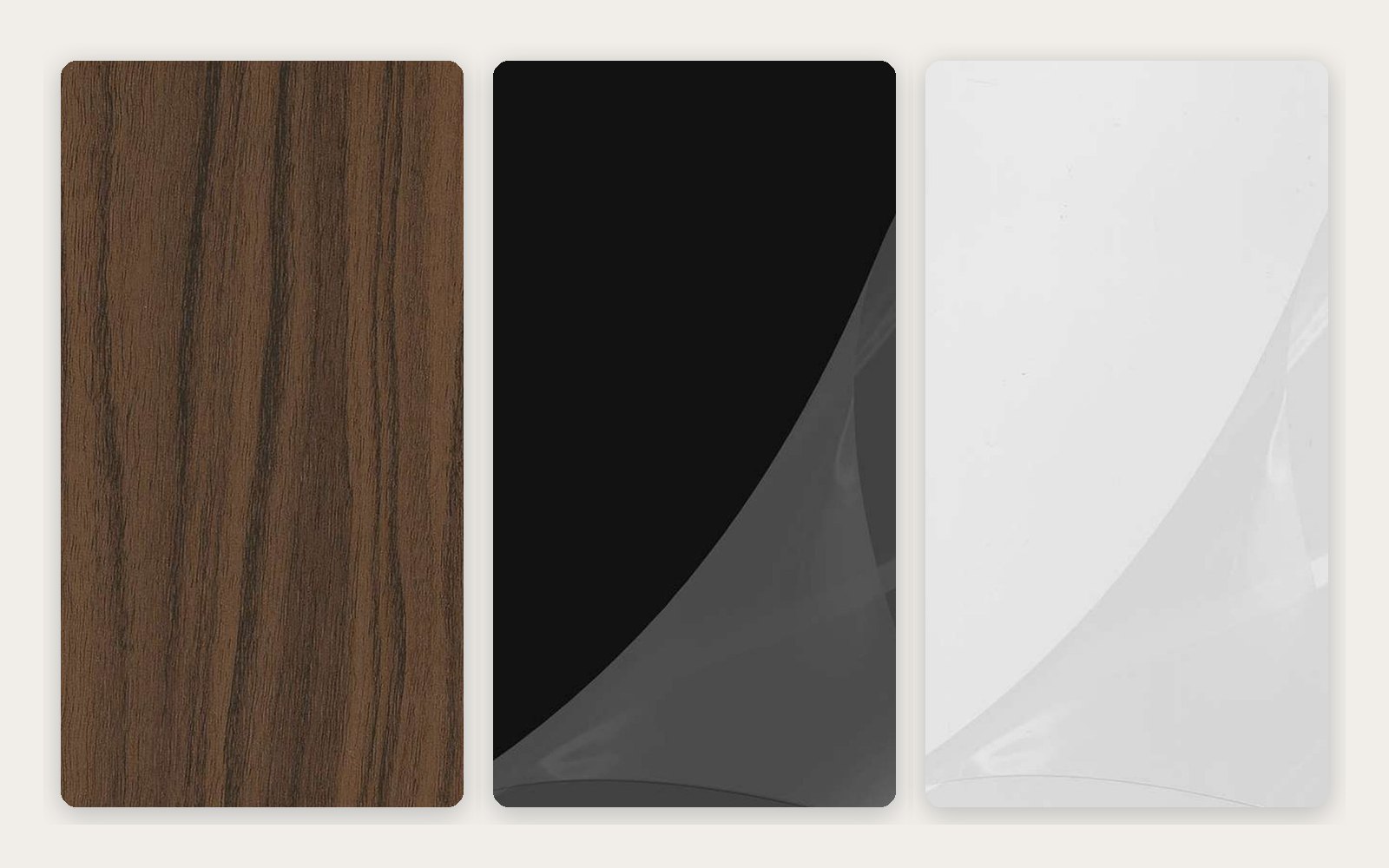
The surface material largely determines how a door or kitchen cabinet looks and how long it lasts. The three most frequently compared options are PVC foil, lacquer and laminate, and each has different strengths and limits.
PVC foil
A flexible decorative layer applied to MDF with a membrane press. Its biggest advantage is that it can wrap profiled fronts in a single piece without edge banding.
- Strengths: A very wide range of patterns such as wood, stone, concrete, satin and Soft Touch; suitable for profiled designs; cost-effective and easy to care for.
- Points to watch: It is sensitive to high heat and prolonged steam, so heat shield strips are recommended next to ovens and dishwashers.
Lacquer
Lacquer is made by coating MDF with layers of primer and paint and sanding between coats. It gives a seamless, jointless look in matt or high gloss.
- Strengths: Unlimited colour choice and a smooth, premium look; it can be refinished by repainting if damaged.
- Points to watch: Production takes longer and costs more, and edges and corners can chip or crack from impacts.
Laminate
A hard surface (HPL) made by pressing resin-impregnated paper layers under high pressure. It is bonded to flat panels and the edges are finished with edge banding.
- Strengths: High resistance to scratches, impact and heat; suited to heavy-use areas.
- Points to watch: It can only be used on flat surfaces; profiled designs are not possible and edge-band joints are visible.
Which one should you choose?
- Profiled, classic or modern fronts: PVC foil stands out for its range of patterns and balance of cost.
- A seamless glossy look: Lacquer is an option if the budget allows.
- Very heavy-use flat surfaces: Laminate's durability is an advantage.
For those who want a lacquer look at a lower cost, satin and high-gloss solid colour foils are also a strong alternative.
